


Acoustic Insulation for Shared Apartment Walls
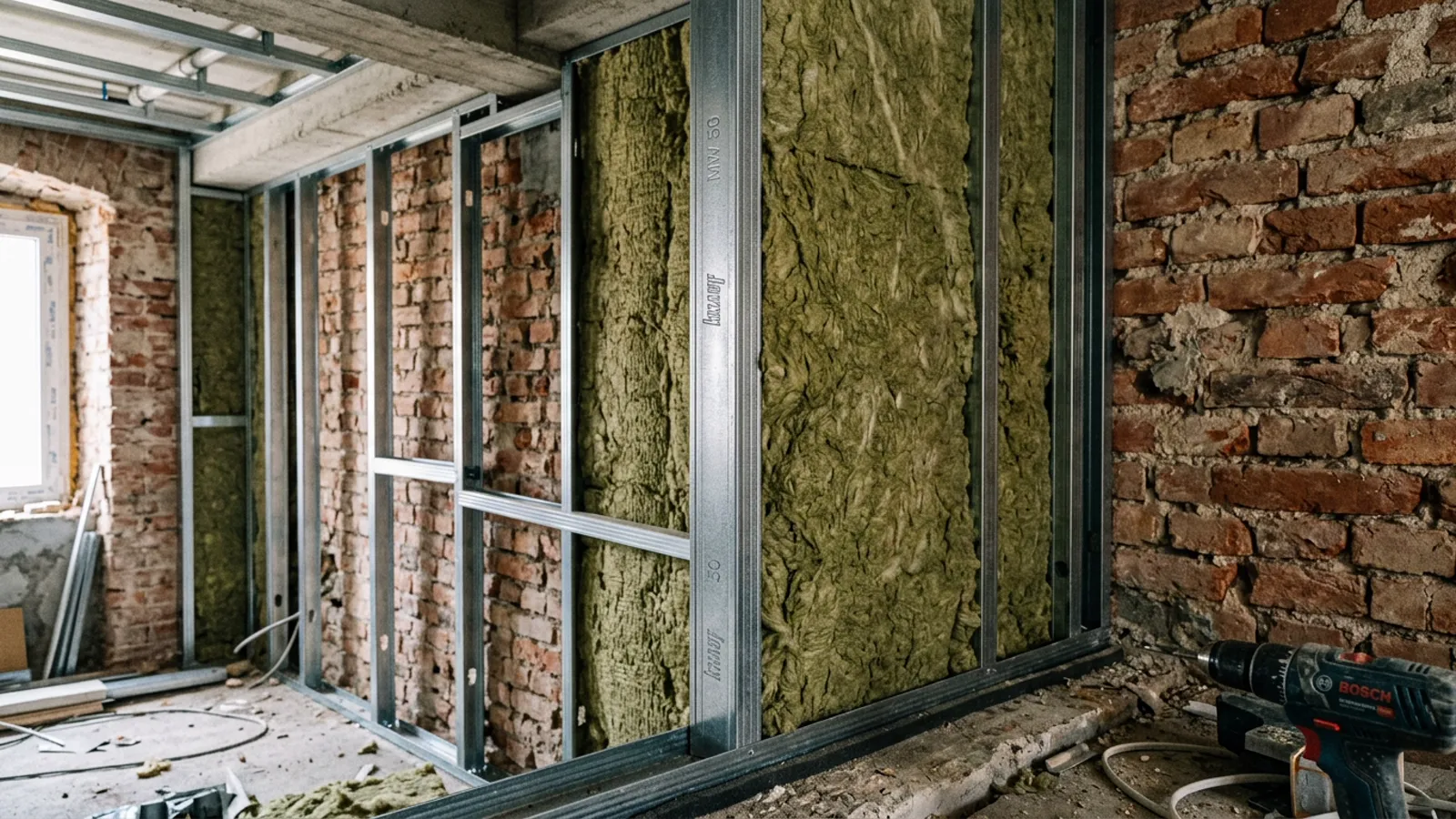
A common complaint in older Croatian apartments is hearing every word or footstep from the neighbor behind a shared brick or concrete wall. The most frequent mistake owners make is gluing thin foam panels directly to the wall—which does almost nothing for low frequencies and structural vibration. Correct acoustic insulation requires mass and decoupling. This means building a separate metal stud frame that does not touch the shared wall, filling it completely with high-density acoustic mineral wool, and closing it with double layers of acoustic drywall. Verifying the air gap and sealing all electrical boxes before the drywall goes up is the most critical step to guarantee quiet living.
Why Thin Materials Fail
Noise transmits through both the air and the building structure. Gluing thin cork, egg cartons, or 2cm foam directly to a wall only slightly reduces high-frequency echo within your own room; it does not stop the structural vibration coming from the neighbor. Real soundproofing requires a barrier that breaks the vibration path.
The Principle of Decoupling
To stop noise, the new inner wall must be physically separated from the noisy party wall. We construct a metal profile frame leaving a 1-2 cm air gap against the existing wall. The floor and ceiling tracks are mounted using acoustic separation tape (brtvena traka) to prevent the concrete slabs from transferring vibration directly into the new metal frame.
Choosing the Right Mineral Wool
The cavity of the new stud wall must be filled with acoustic mineral wool (kamena vuna). This material absorbs the sound waves that enter the cavity. It is crucial to use dense, heavy wool designed for acoustics, not just thermal insulation, and to ensure there are no gaps where the panels meet.
Sealing Weak Points
Acoustic insulation is like waterproofing: one small hole ruins the entire assembly. Electrical sockets and switches are the most common weak points. They must be installed in acoustic back-boxes or wrapped with acoustic putty. All perimeter joints where the drywall meets the ceiling, floor, and adjacent walls must be sealed with acoustic sealant before the final finish.
Flanking Transmission Check
Before investing in a soundproof wall, check if the noise is actually traveling through the continuous concrete floor or ceiling slab (flanking transmission). If the floor slab vibrates strongly, insulating just the wall might not solve the whole problem, and a floating acoustic floor might be necessary.
Apartment Renovation in Croatia
Complete apartment renovation with one responsible partner
Explore Apartment Renovation in Croatia