


Built-in Toilet Cistern Installation Checks in Croatia
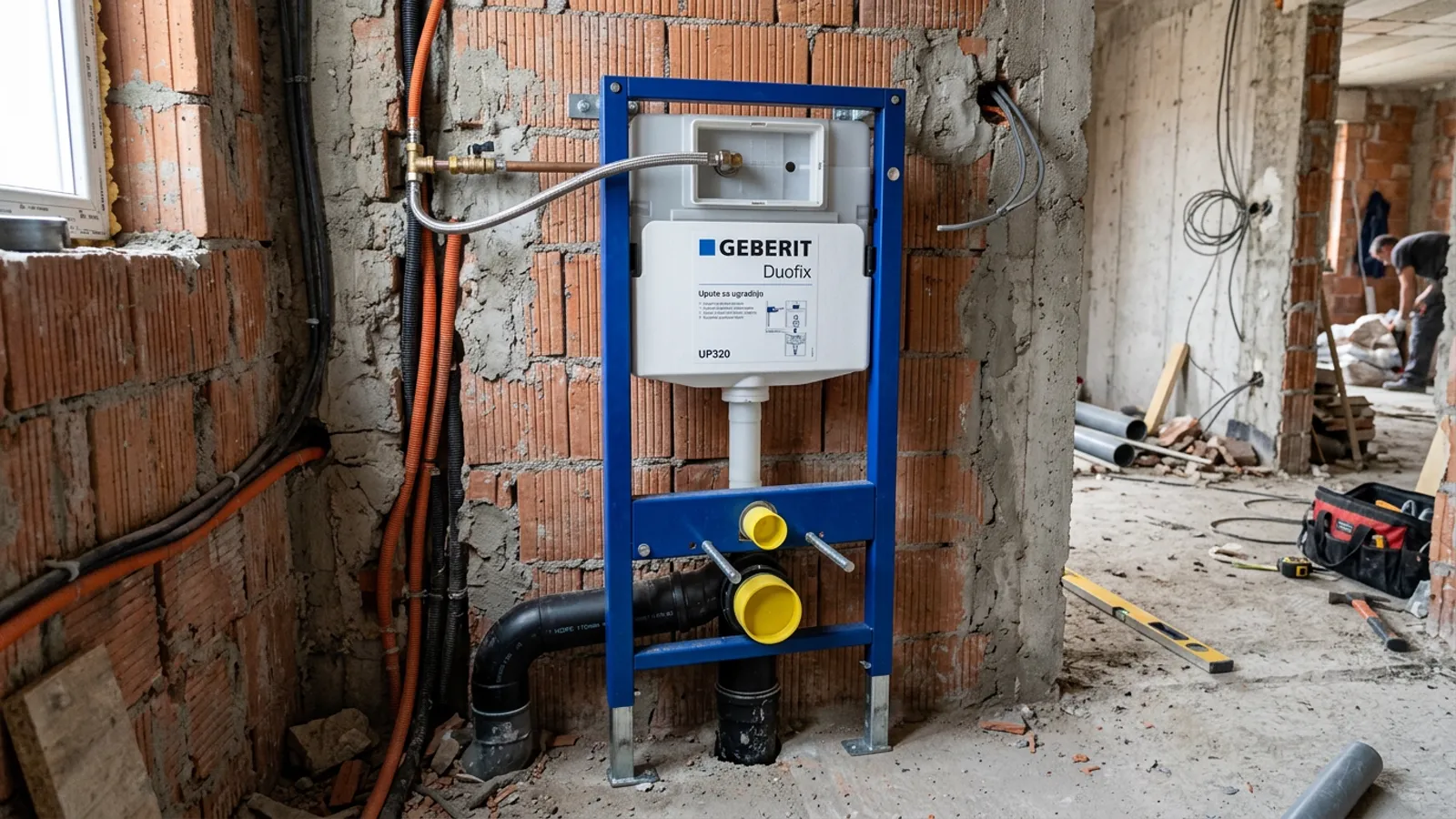
A built-in toilet cistern (like Geberit or Tece) offers a clean, modern aesthetic for contemporary Croatian bathrooms. However, once the frame is covered by drywall and expensive large-format tiles, any plumbing leak or structural movement becomes a disaster to fix. Verifying the secure mounting, drainage slope, and water supply connections before the walls are closed is a critical checkpoint during the house construction phase.
Check 1 - Structural Mounting
The metal frame must be bolted directly into the structural floor slab and a solid load-bearing wall (like brick or concrete). If it is mounted only to a lightweight partition or an unlevel screed, the toilet will eventually flex when used, causing the grout and tiles around the flush plate to crack over time.
Check 2 - Drainage Pipe Connection
The heavy black or grey PVC soil pipe connecting the cistern to the main vertical drain must have a continuous downward slope of at least 1-2%. It should be securely clipped so it cannot sag when the concrete screed is poured over it or when backfilled.
Check 3 - Water Supply Line
The cold water supply must be connected to the internal shut-off valve inside the cistern. Avoid using flexible braided hoses for concealed connections, as they can fail over time. A rigid PEX or multi-layer pipe with a high-quality crimped fitting is mandatory for anything hidden behind the wall. Contact us for professional construction supervision.
House Construction in Croatia
Planning, coordination and execution control for new houses and villas
Explore House Construction in Croatia