


Summer Concrete Pouring: Hydration and Curing
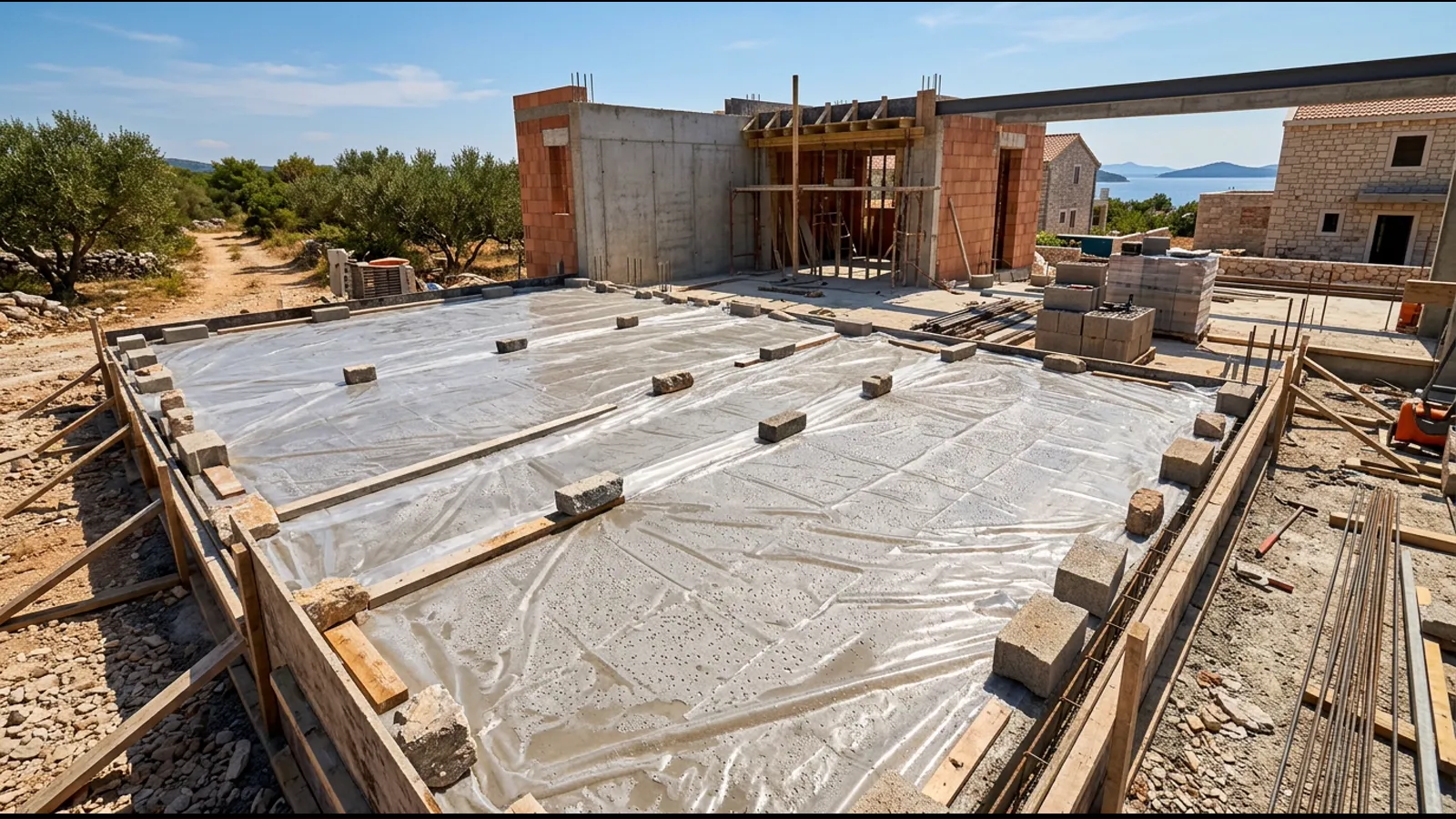
Pouring concrete during a Croatian summer requires strict temperature and moisture control. When the sun beats down on a fresh slab, the water evaporates too quickly, stopping the chemical curing process and causing severe shrinkage cracks. Proper planning and curing are non-negotiable for structural integrity.
The Danger of Adding Water
A common and dangerous myth on site is that adding raw water to the mixer truck makes the concrete easier to work in the heat. Adding unauthorized water alters the water-to-cement ratio, drastically reducing the final structural strength of the concrete.
Scheduling and Retarders
During July and August, pours should be scheduled for early morning or late evening. The concrete plant should be instructed to add chemical retarders to the mix, which safely delay the setting time without compromising strength.
Immediate Moisture Protection
As soon as the concrete is finished and can support light weight, it must be protected from direct sun and wind. Covering the slab with plastic foil traps the evaporating moisture, creating a greenhouse effect that keeps the surface hydrated.
Continuous Water Curing
If foil is not used, the slab must be continuously kept wet by spraying it with water for at least 7 days. Letting the surface dry out and then suddenly shocking it with cold water later will cause thermal cracking. Curing is an active daily responsibility.
House Construction in Croatia
Planning, coordination and execution control for new houses and villas
Explore House Construction in Croatia