


Planning LED Driver Access Before Plastering
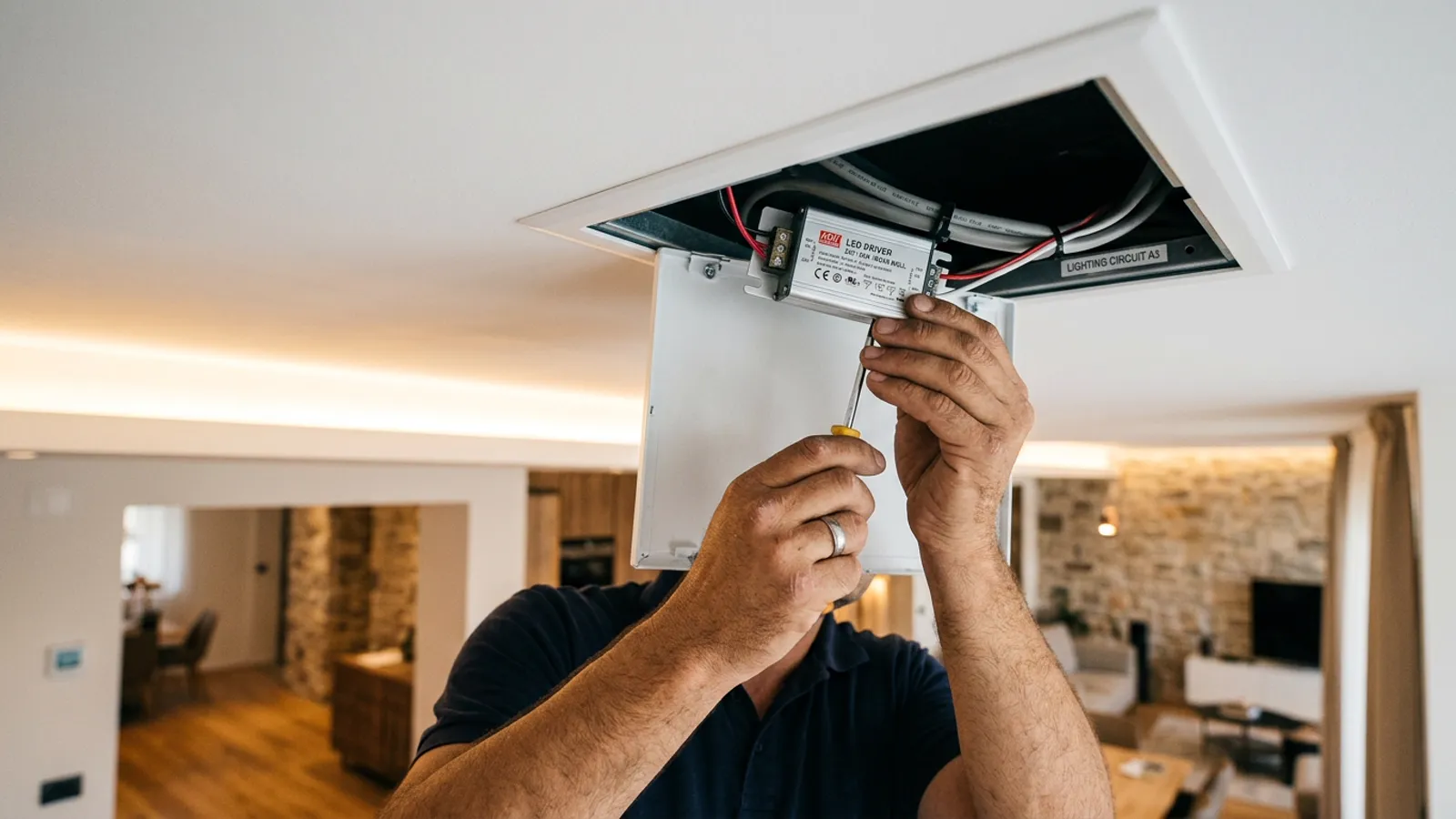
LED strips require transformers (drivers) that will inevitably need replacement. Hiding them permanently behind plasterboard is a critical mistake. Here is how to plan ventilated, accessible driver locations before the ceiling closes.
Why LED drivers fail
LED strips can last for years, but the drivers powering them are under constant thermal stress. Heat reduces their lifespan significantly. If a driver fails and there is no access panel, the only solution is cutting a hole in the finished ceiling, requiring new plastering and painting.
Planning the access location
Do not wait for the electrician to leave the drivers loose in the ceiling cavity. During the electrical rough-in, specify exactly where the access panels will be. Choose discreet locations like inside built-in wardrobes, above tall kitchen cabinets, or near the wall edges where a clean magnetic panel can blend in.
Ventilation and heat management
Drivers generate heat. A small, sealed plasterboard box will cause premature failure. Ensure the access void has enough air volume for passive cooling, or leave a small shadow gap near the access panel to allow heat to escape.
Sizing the access panel
A common mistake is installing a panel just large enough for the driver itself, forgetting that a hand holding a screwdriver needs to fit inside to disconnect the wiring. Use a minimum 20x20 cm panel, or larger if multiple drivers are housed together.
The handover test
Before final payment, ask the electrician to demonstrate removing and replacing one driver through the finished access panel. If they cannot do it without damaging the surrounding paint or struggling with short cables, the installation is not ready for handover.
Interior Design in Croatia
Coastal interiors designed from the floor plan outward
Explore Interior Design in Croatia