


Reinforcing Lightweight Walls for Kitchen Cabinets
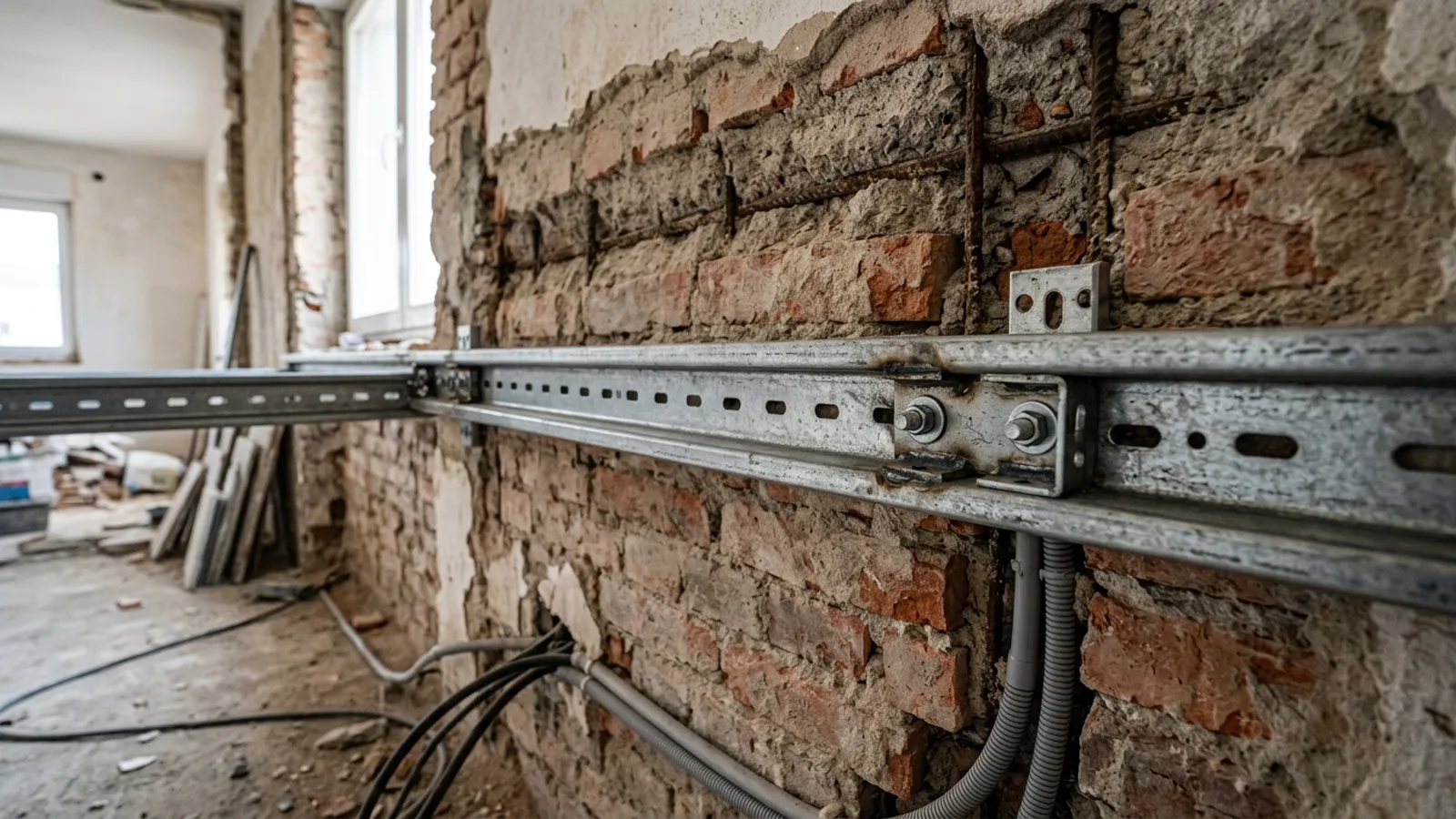
Hanging heavy kitchen cabinets loaded with dishes on old, porous brick or aerated concrete blocks is a major safety risk. The wall must be structurally prepared and reinforced before the kitchen installer arrives.
The risk of weak walls
Older apartments in Croatia often feature internal partition walls made of hollow bricks or lightweight blocks. When a fully loaded upper kitchen cabinet is anchored directly into a weak substrate using standard rawlplugs, the continuous cantilever load can cause the fixings to pull out, resulting in a catastrophic collapse.
Checking the wall composition
Before ordering the kitchen, determine exactly what the mounting wall is made of. A simple drill test will reveal whether you hit solid concrete, hollow brick, or crumbly mortar. If the wall is weak, standard nylon plugs are insufficient and a structural reinforcement plan is required.
Installing a heavy-duty support rail
The most reliable solution is to install a continuous steel or thick structural timber mounting rail across the wall during the rough construction phase. This rail must be anchored deeply into the structural framework or chemically bonded into the masonry, distributing the point load of the cabinets across a much wider area.
Chemical anchors for hollow brick
If fixing a rail into hollow brick, standard expansion anchors will shatter the brittle brick web. Instead, use chemical anchors (resin) injected into a mesh sleeve. The resin forms a solid block inside the cavity, providing a secure, high-capacity mounting point.
Coordination with the kitchen installer
Do not surprise the kitchen installer with a reinforced rail. Coordinate the exact height and depth of the rail with the kitchen drawings before plastering. The plasterer can then build the wall finish out to make the rail perfectly flush, providing a solid, invisible anchoring line for the cabinets.
Apartment Renovation in Croatia
Complete apartment renovation with one responsible partner
Explore Apartment Renovation in Croatia