


Walk-in Shower Waterproofing: The Linear Drain Connection
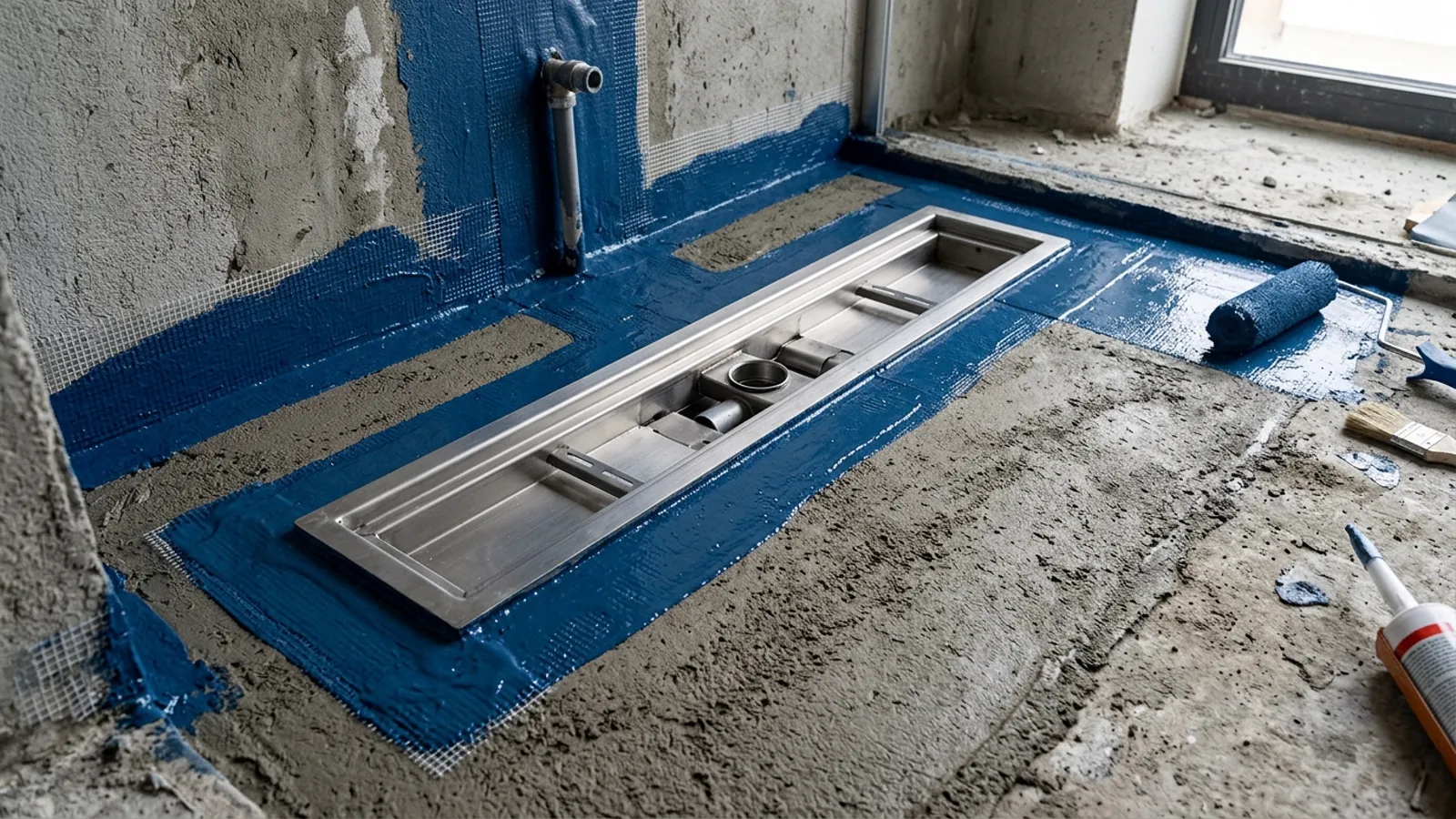
A leaking walk-in shower is one of the most expensive failures in an apartment renovation, often requiring the entire bathroom floor to be demolished. The most critical point of failure is not the flat floor, but the connection between the stainless steel linear drain and the cement screed. Proper waterproofing requires a multi-step process using specialized sealing tapes and elastic liquid membranes before any tiles are laid.
The Weakest Link: The Drain Flange
Water doesn't usually leak through the center of a tile; it leaks through the grout and finds its way to the weakest point underneath. For linear drains, this is the metal flange that meets the concrete. This junction cannot be sealed with silicone; it requires a permanent, bonded waterproofing system.
Preparing the Screed Slope
Before any waterproofing is applied, the cement screed must be perfectly cured, clean, and sloped correctly (usually 1.5% to 2%) towards the linear drain. If the screed has depressions, water will pond under the tiles, eventually degrading the tile adhesive.
Planning a walk-in shower renovation?
Review the bathroom scope, drain position and waterproofing interfaces together before tiling. Start with the bathroom service rather than treating the drain as an isolated finish.
Discuss the scope of a bathroom renovationApplying the Sealing Tape
A flexible, rubberized sealing tape must be embedded into the first layer of liquid waterproofing membrane. This tape is applied over the drain flange, bridging the gap to the concrete screed. The tape absorbs structural movement and prevents the waterproofing layer from tearing.
Wall and Corner Connections
The same sealing tape must be applied to all internal corners and wall-to-floor junctions inside the shower area. Water running down the walls will pool at the edges, making these corners highly susceptible to moisture penetration.
Two Coats of Liquid Membrane
After the tapes are set, the entire shower floor and walls (up to at least 2 meters) must be coated with two continuous layers of elastic liquid waterproofing membrane. The second coat is applied only after the first has completely dried, creating a seamless, rubber-like basin ready for tiling.