

Smart Home Wiring: Planning Your Electrical Installation Before Plastering
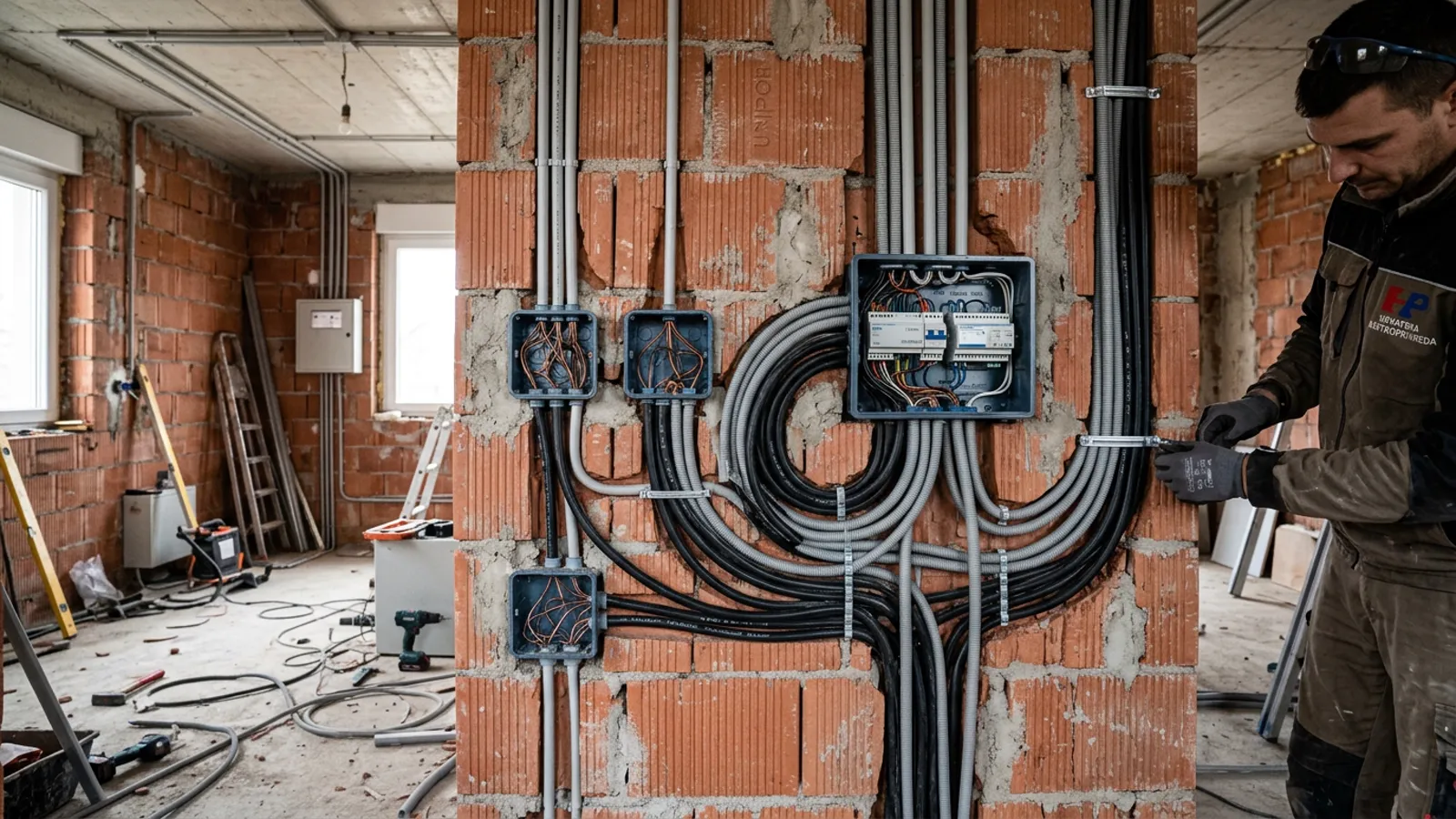
Wireless smart home devices still require reliable power and neutral wires at the switch. Failing to plan these electrical fundamentals before the walls are plastered will severely limit your smart home options or force costly rework later.
The Myth of the Completely Wireless Smart Home
Many owners assume that because modern smart home devices use Wi-Fi, Zigbee, or Bluetooth, they no longer need complex electrical wiring. This is a common misconception. Wireless devices still require constant, reliable power to operate their radios and relays. If you do not plan for this during the rough-in electrical phase of your apartment renovation, you will find that 'wireless' actually means surface-mounted battery devices, visible cords, and limited functionality.
The Importance of the Neutral Wire
Traditional lighting circuits in Croatia often only run the live wire (faza) down to the wall switch, leaving the neutral wire (nula) at the ceiling junction box. However, smart light switches and smart relays require both live and neutral wires to maintain power for their wireless connection. Without a neutral wire at the switch location, your choice of compatible smart home hardware drops significantly, and those that do work often suffer from flickering or require cumbersome bypass modules.
Deep Backboxes (Kutije za ugradnju)
Smart relays (such as Shelly, Fibaro, or Sonoff) are designed to sit behind traditional light switches and power outlets, making standard switches 'smart.' These modules take up space. Standard shallow backboxes (kutije) do not have enough depth to accommodate both the smart relay and the switch mechanism without crushing the wiring. Instruct your electrician to install deep backboxes (duboke kutije) everywhere during the rough-in phase; the cost difference is negligible, but the flexibility it gives you is immense.
Hardwiring Access Points and Heavy Data
Relying entirely on Wi-Fi for your smart home network, entertainment, and work devices creates congestion and instability, especially in older buildings with thick masonry or reinforced concrete walls. Plan for hardwired Ethernet (Cat 6 or higher) cable drops in ceilings for wireless access points, behind TVs, and at desk locations. A reliable smart home starts with a robust, hardwired local network backbone.
Motorized Blinds and Future Expansions
Motorized blinds (rolete) and smart curtains are often forgotten during early electrical planning. They require dedicated power feeds to the top corners of your windows. Even if you do not plan to install motorized blinds immediately, running a conduit with a power line to the window lintel and capping it off during the renovation saves significant mess and expense if you choose to upgrade in the future.
What to Discuss with Your Electrician
Before any chasing or drilling starts, provide your electrician with a clear plan. Specify the exact locations where you want smart control, demand deep backboxes throughout the apartment, confirm that a neutral wire will be pulled to every switch, and define the locations for network access points and window blind power. Getting these electrical fundamentals right during your apartment renovation ensures your smart home is reliable, invisible, and easy to upgrade. For expert coordination of your electrical and design requirements, contact us.
Apartment Renovation in Croatia
Complete apartment renovation with one responsible partner
Explore Apartment Renovation in Croatia